
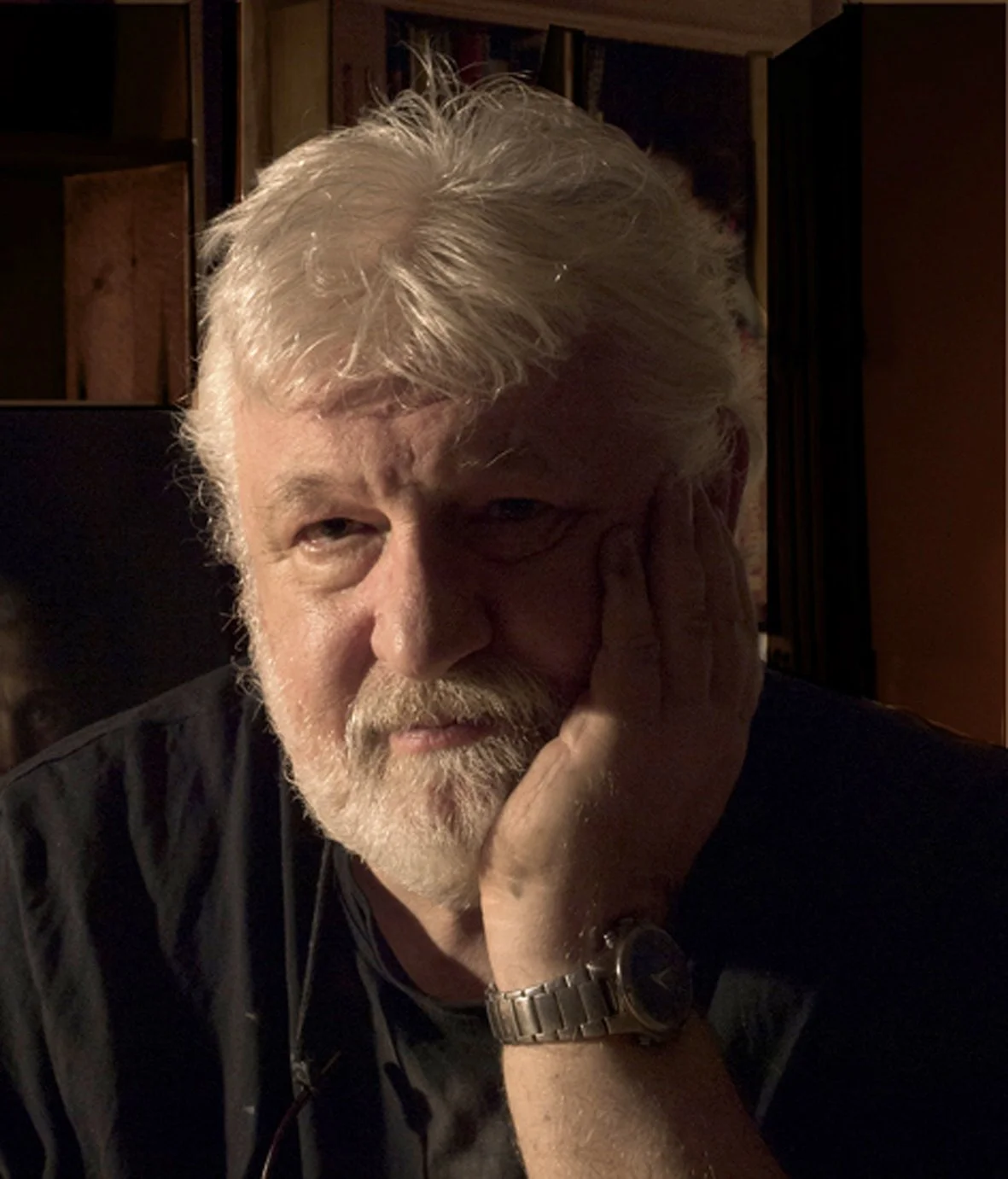
ABOUT MIKE SKIDMORE: HIS JOURNEY, ARTWORK AND IDEAS
Purpose
Someone once asked what epitaph I would like. It was a humorous question, and I replied in kind. Afterwards, though, it made me think. The answer I decided on was, ‘He made memories, told stories and fulfilled his purpose.’
Memories are like time capsules from the past with paintings that remind me of achievements, events and emotions. And as such, each has a story, sometimes my own, reflected in a particular piece or a narrative concerning the composition in its own right. And purpose is something I have wanted my whole life. A reason to be who I am.
I paint in oils because they are tactile, forgiving, encourage experimentation and are playfully messy! The techniques I use are rooted in classical methodologies, allowing highlights to shine and evocative shadows for mood and context. I take my work seriously but not myself. It is all about enjoyment and inhabiting a happy place of fulfilment.
Early beginnings
When I was approaching twelve years old, my parents inherited a painting from a great-aunt, which turned out to have been painted by a famous Victorian artist. The subject was a nun looking heavenward and praying, which had a certain irony because, as I discovered in later life, my great-aunt was a lady of the night who married one of her wealthy clients.
I was so fascinated by the painting that my interest in portraiture grew. I would sit on the landing and sketch it, which fired my love of portraits and brought new meaning to my art.
Art college
It was not an easy journey to become an artist. My portrait work was not considered artistically relevant at the time, and after three years of criticism, my confidence was shattered, and my dream of becoming a professional portrait artist faded. So, I reluctantly decided to head for pastures new.
Design
For twenty years, I worked incredibly hard to service demanding clients whilst managing a growing workforce. Eventually, the late nights and pressure took their toll, and my body succumbed to illness.
It took a few years to make a full recovery, during which time I confronted my demons. Why had I spent so long running away from my lifelong dream to be a professional artist? The answer was complex, but I sure as hell wasn’t going to run anymore.
Artist
Boy, it was hard to get started. In the first two years, I earned a grand total of not very much. After putting in the hours and discarding many pictures, I finally received my first paid portrait commission. Unveiling the finished piece was a scary experience. Fortunately, the client coughed up, either because he was genuinely happy or because he had poor eyesight!
Fast-forward to today. Painting still life now occupies more of my time than portraits. I love both and recognise how lucky I am. After all, how many people have a thirty-second commute to the office, drink coffee by the gallon, and listen to loud music while working?
My little dog, Bindi, is always by my side, watching me paint—she even has her own armchair in the studio. A scratch behind the ears is all it takes for her to wag her tail in approval.
How I work
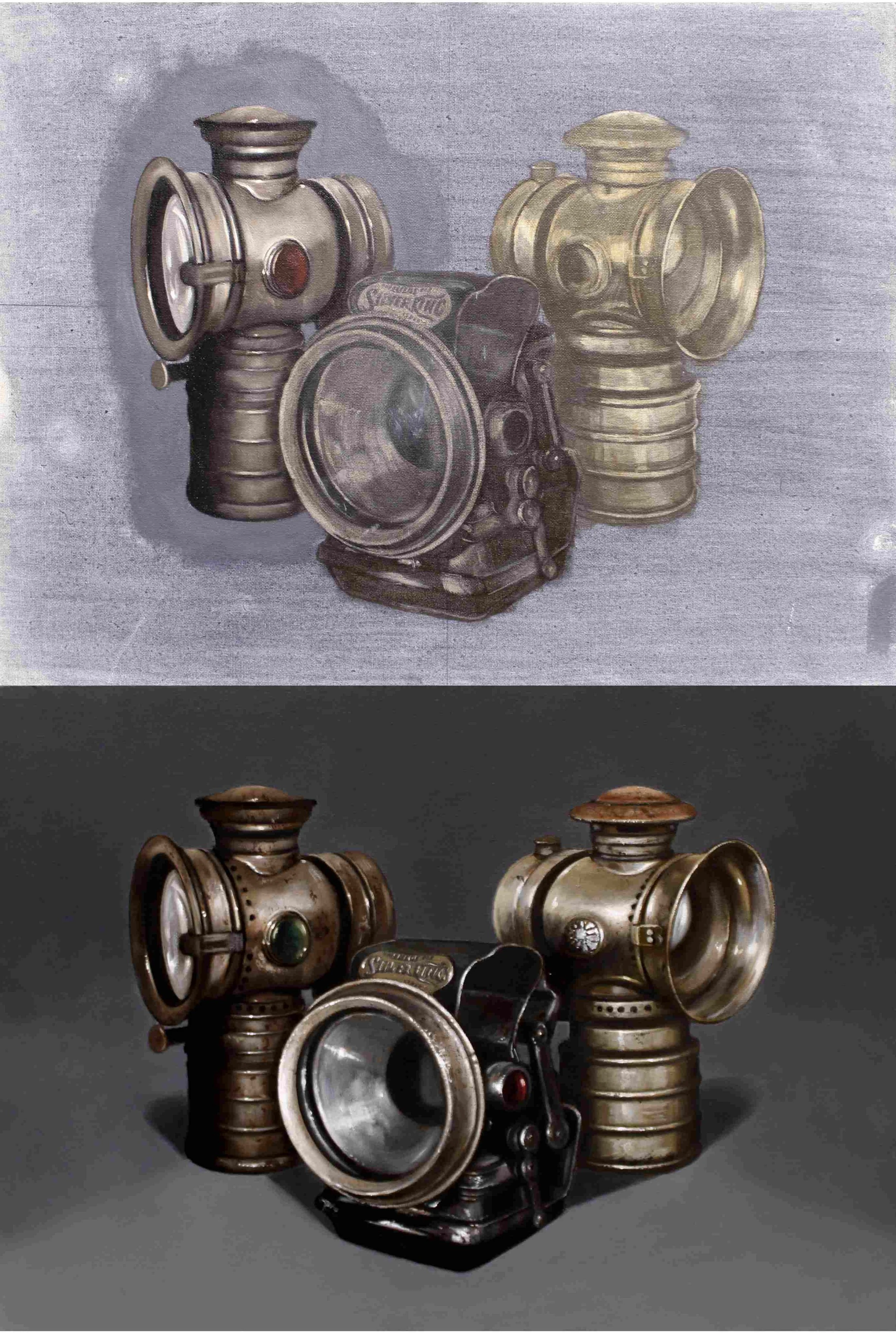
Still life commission of three old bicycle lights.
Drawing
I mostly use a pencil to draw directly on a canvas, focusing less on accuracy and more on the composition. Once I’m happy, I draw a box around the subjects' extremities and then add shadow shapes. Once complete, a thin coat of acrylic paint is applied to the surface using the picture's dominant colour, which seals the pencil in place.
Underpainting
This is the first layer of paint in preparation for the more comprehensive stage. It has two primary benefits. First, it allows for corrections and encourages experimentation. Second, I can evaluate the lights and darks without dwelling on the final colour scheme.
Overpainting
I begin with a simple application of paint to define the shapes and planes. I then soften the shapes where needed. After this, I paint thinly over the darker areas, then build up to the lightest areas, where the paint is thickest, to create the illusion of three dimensions.
Once this layer is dry, I apply transparent glazes to adjust shadows and tint the dry colours to experiment with different hues. When the previous stage is dry, it is time to refine the painting and add details.
The painting above proved to be the sort of challenge I relish. The lamp at the front was provided by the owner who commissioned the picture. The other two came from separate, poor-quality images I found. None of the perspectives matched and nor did the lighting. Consequently, I had to keep refining the ovals and rely on my artistic judgment for the darker areas. It wasn’t easy and required many corrections, but the result was worthwhile.
Still life ideas
My head collects ideas like a squirrel preparing for winter, and some of them are nuts (pun intended). Even if they are not, many are buried, waiting for the right time to dig them up, and only the most mouthwatering get eaten immediately.
Where ideas come from isn’t straightforward: some pop into my head seemingly from nowhere, some require a reference point to spark a concept, and others flow from other ideas.
What rarely works is staring at the proverbial blank canvas, trying to conjure an idea. Whenever I do that, nothing that arises has a spark. There must be a starting point. Sometimes, I wander around town browsing second-hand, charity, and antique shops. An object will catch my eye, and my mind begins pondering possibilities. I also tend to buy stuff on a whim. Consequently, my house looks like an emporium of odd objects. I call it dusty chic!